Vegan Protein Pancakes (Fluffy, 4-Ingredients)

on Oct 19, 2014, Updated May 14, 2026
This post may contain affiliate links.
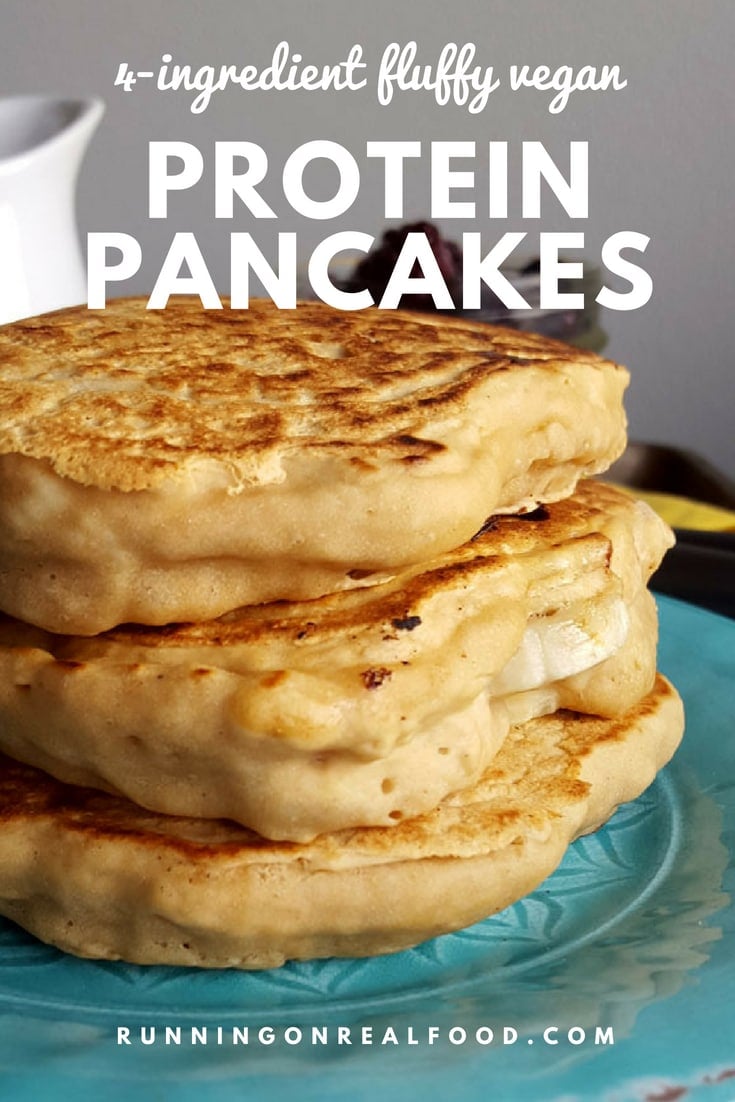
These vegan protein pancakes have been in my breakfast rotation since 2014. They come together in one bowl with just four ingredients: flour, protein powder, baking powder and water, and they’re ready in less than 15 minutes. No eggs and no dairy needed.
The protein powder adds protein and flavour to the batter so you don’t need much else. I’ve made these with a lot of different brands of protein over the years. Any vegan protein powder works but the flavour of the powder comes through in the pancake, so use one you enjoy on its own.
Each serving has around 16 grams of protein, though this will vary depending on your protein powder.
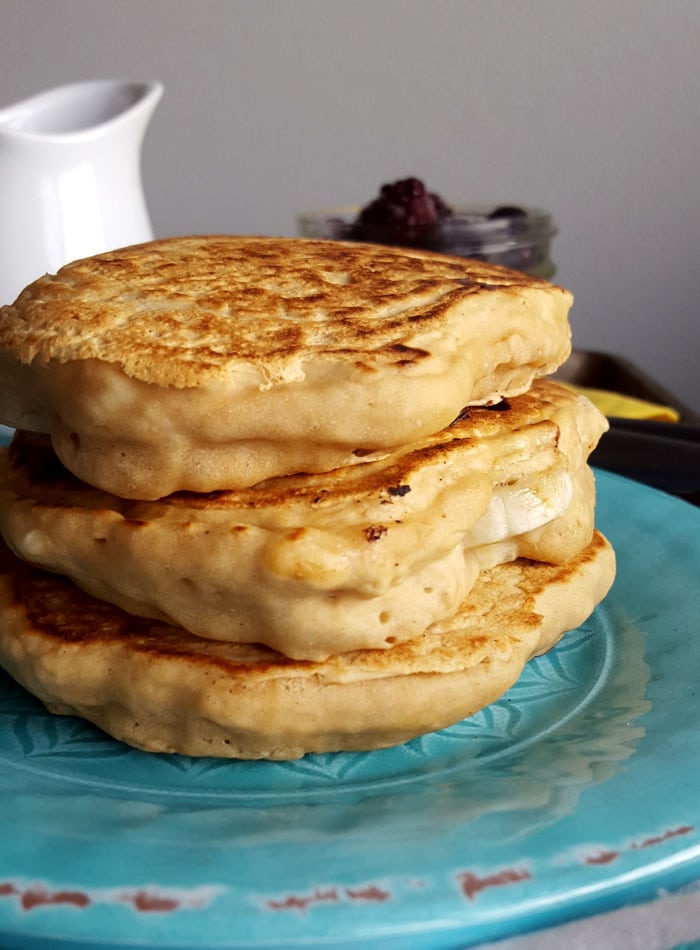
Table of Contents
- 5-Star Review
- Why These Vegan Protein Pancakes Work
- 🔍 Recipe at a Glance
- Why Readers Love this Recipe
- Ingredients You’ll Need
- How to Make Vegan Protein Pancakes
- Notes from Deryn
- FAQs
- Topping Ideas
- Making Ahead & Storing
- More Vegan Pancakes Recipes
- More High-Protein Vegan Breakfast Ideas
- Vegan Protein Pancakes (No Eggs, Fluffy & Easy) Recipe
5-Star Review
I found this a couple years ago and I found myself doing this every weekend. I now make a large batch of the mix so that I just have to add the wet ingredients and it’s ready to go. I love it. I highly recommend the Vega sport protein powder in vanilla, it adds a nice flavour without tasting like protein powder, and no powdery taste. I also usually use oat milk or whatever I have instead of water. Love these and I hope I never lose this recipe!!
Why These Vegan Protein Pancakes Work
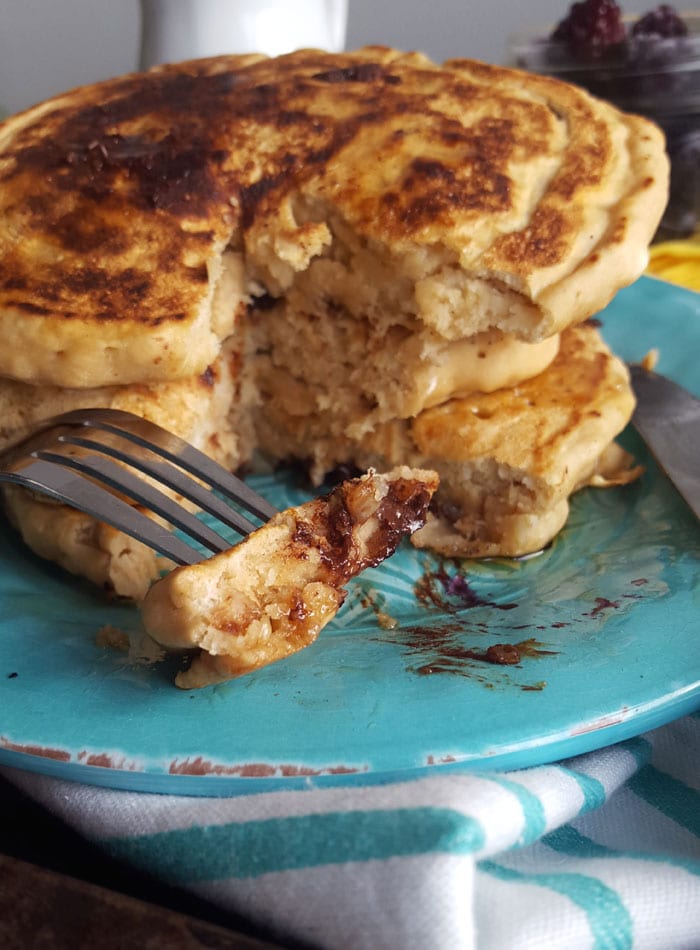
Most protein pancakes are dense, rubbery or gummy. The protein powder absorbs liquid differently than flour and the texture suffers. These work because the ratio of flour to protein powder is balanced to keep them light and fluffy rather than chewy. The tablespoon of baking powder sounds like a lot but it’s what gives them their thick, airy rise.
They’re also so simple to make. No flax egg, no banana, no plant milk required. If you want a richer batter you can swap half the water for oat milk or almond milk, but I’ve made these with plain water hundreds of times and it works perfectly.
The no-egg, no-dairy formula means they work for a wide range of dietary needs without any substitutions. They’re naturally vegan, can easily be made gluten-free with a 1:1 flour swap, and the sweetness is entirely adjustable depending on whether your protein powder is already flavoured.
🔍 Recipe at a Glance
Prep Time: 5 min
Cook Time: 10 min
Servings: 2
Per Serving: 295 calories, 16g protein
Diet: Vegan, egg-free.
Difficulty: Easy
Ingredients You’ll Need
- All-Purpose Flour: The recipe calls for all-purpose flour and that works best for a thick and fluffy result, however, you can also use an all-purpose gluten-free flour, whole wheat flour or white whole wheat flour.
- Vegan Protein Powder: Any variety of chocolate or vanilla flavoured vegan protein works. I like Vega, PVL, Genuine Health and PEScience. I have not tested these with whey protein myself but readers have with success if you want to review the comment section.
- Baking Powder: For super thick pancakes, yes, it’s 1 tablespoon, not 1 teaspoon. You can reduce this by up to half and use a reduced-sodium baking powder is sodium content is a concern.
- Sweetener: You may or may not need sweetened depending on the protein powder used. You can use sugar, stevia, monk fruit, coconut sugar, maple syrup, agave syrup, any sweetener you like. If you use unflavoured protein, you’ll need to add sweetener.
- Liquid: These are made with water and that works just fine though you can use half water and half plant-based milk, if you like. Dairy milk is also ok to use.
Add-Ins: Mix up to 1/2 cup fresh berries, chopped fruit or chocolate chips into the batter or add a few piece to each pancake after adding the batter to the pan. If you’d like to use additional flavourings, you can try 1/2 tsp cinnamon and 1 tsp vanilla extract.
How to Make Vegan Protein Pancakes
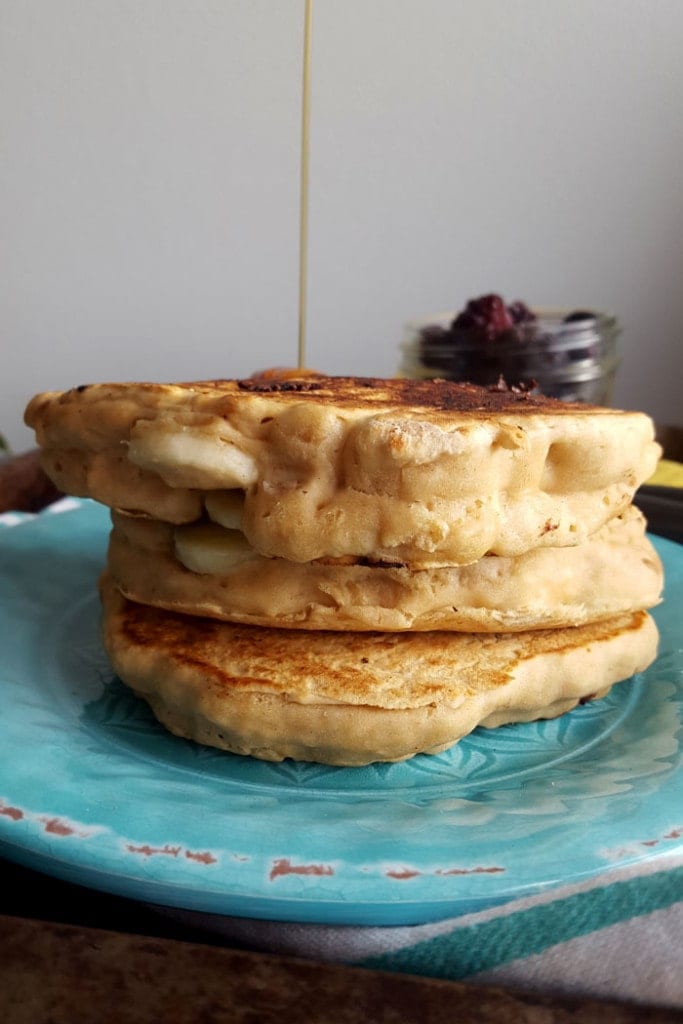
Step 1: Add the flour, protein powder, baking powder and salt (if using a dry sweetener, add that now as well) to a mixing bowl and mix until fully combined with no clumps remaining.
A whisk or fork can help to break up any clumps of flour or protein. This step is important to make sure the baking powder is well distributed.
Step 2: Add the maple syrup, if using, and slowly add the water then mix until all of the flour has been wetted. Once combined, stop mixing.
The batter should be a little lumpy and quite thick but still pourable. Add a little extra water if needed to adjust the consistency. Let the batter rest for 5-10 minutes while you heat a pan over medium-low heat.
Step 3: Add a little oil or cooking spray to your pan if needed then scoop 1/4 cup portions of batter into the pan.
Cook until bubbles appear in the batter and the edges of the pancakes look dry and firm. Flip them and cook for 1-2 more minutes.
Enjoy your pancakes with your favourite toppings!
Notes from Deryn
- Start with 1 cup of water. Some protein powders absorb more liquid than others, so if your batter is too thick to pour add water a tablespoon at a time until it’s thick but pourable. The original recipe called for 1.5 cups but readers found that too runny with some powders.
- The tablespoon of baking powder is correct. It’s what gives these their thick, fluffy rise. Don’t cut it back unless sodium is a concern, in which case use a reduced-sodium baking powder rather than reducing the amount.
- Let the batter rest for 5-10 minutes while the pan heats up. This lets the baking powder activate and gives you a noticeably thicker, fluffier pancake.
- Sweetener depends on your protein powder. Flavoured powders like vanilla or cinnamon roll already contain sweeteners, so you can reduce the maple syrup to 1 tablespoon or skip it entirely. Unflavoured powders work best with the full 2 tablespoons. Taste the batter before cooking and adjust.
- Batch the dry mix. If you make these regularly, mix the flour, protein powder, baking powder and salt in a large jar with a label, then just add water and sweetener when you want pancakes.
- Serving size varies with pancake size. The recipe makes 2 servings regardless of how many pancakes you get from the batter. The nutrition facts are based on half the recipe, adjust if you make smaller or larger pancakes.
FAQs
Yes. Substitute the all-purpose flour with a 1:1 gluten-free baking flour like Bob’s Red Mill. You may need a splash more water to adjust the consistency. For other high-protein gluten-free pancakes, try my chickpea flour pancakes, buckwheat pancakes or quinoa flour pancakes.
Yes. Whole wheat flour or white whole wheat flour both work as direct substitutes. The pancakes will be slightly denser with a nuttier flavour. Start with the same amount and add a splash more water if the batter seems too thick.
Yes. Let them cool completely, then freeze on a baking tray before transferring to a container or layer with parchment paper between each pancake to prevent sticking. They keep for up to 3 months and reheat well in a pan, oven, microwave or toaster.
These are a nutritious breakfast. They have 16g protein, 60g carbs and 3.5g fibre per serving and are about 300 calories per serving. Standard pancakes are carb-heavy with little protein, which often leaves people hungry an hour later. Adding vegan protein powder turns pancakes into a more complete meal. For extra nutrition try using whole wheat flour, adding a tablespoon of ground flax, or topping with berries.
Not this recipe. The protein powder is a key structural and flavour ingredient. For pancakes without protein powder try my chia seed pancakes, fluffy whole wheat vegan pancakes or buckwheat pancakes instead.
Yes. These work with water or milk. The protein powder provides enough flavour and richness that plant milk isn’t needed. If you prefer a richer batter, swap half the water for oat or almond milk.
These pancakes are completely egg-free. The baking powder provides the rise, and the flour and protein powder combine to give the structure that eggs would typically provide. No flax egg, chia egg or banana is required.
Topping Ideas
Here are some of my favourites.
- peanut butter, almond butter, tahini or sunflower seed butter
- date paste or dates soaked in hot water then blended to make caramel sauce
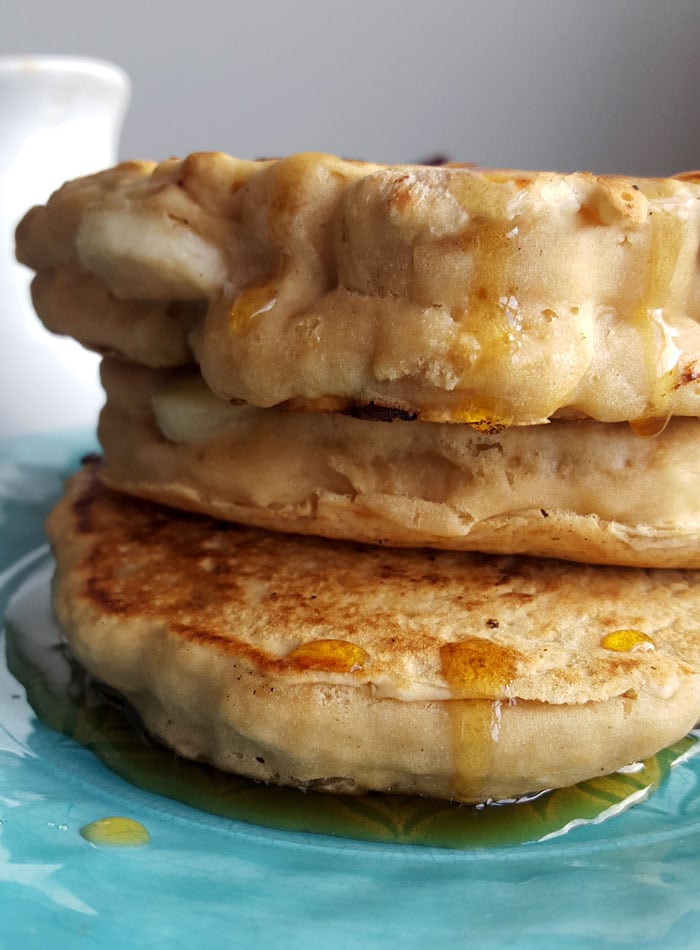
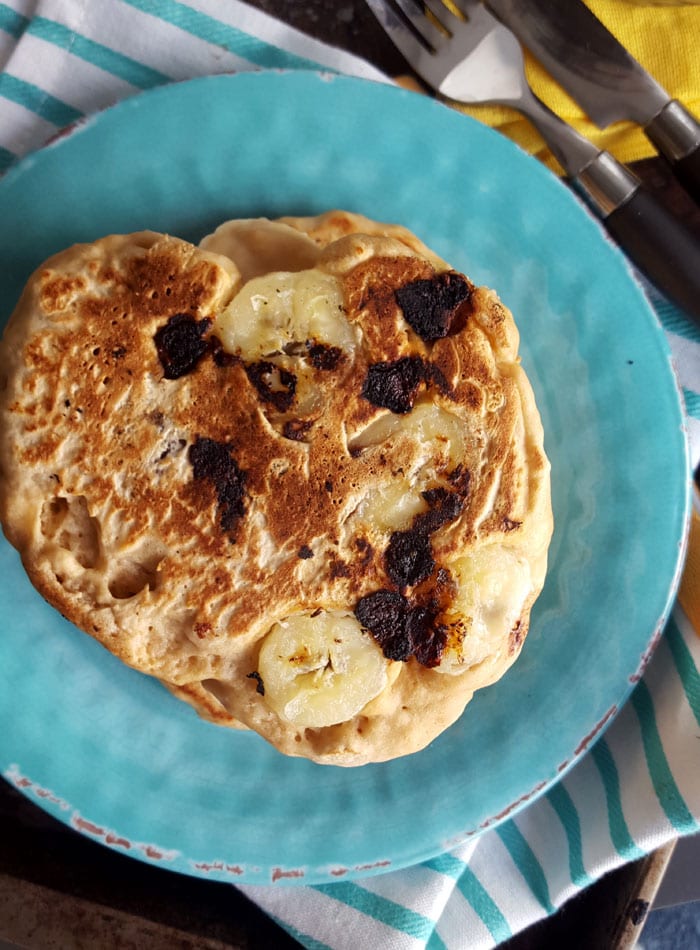
- sliced banana – can add these directly to the batter too
- fresh blueberries, strawberries or cherries
- homemade raw chocolate sauce made from maple syrup, coconut oil and cacao powder
- cacao nibs or dairy-free chocolate chips (you can also add these to the batter for chocolate chip pancakes!)
- maple syrup
- chia seed jam
- coconut butter
- homemade caramel sauce
- shredded coconut
- apple butter
Making Ahead & Storing
- Fridge: Extra pancakes can be stored in a container in the fridge and reheated in the microwave, oven, toaster or in a pan.
- Freezer: Let cool then freeze on a baking tray before transferring to a bag or container or freeze the pancakes with a piece of parchment between them to prevent sticking.
- They can be reheated from frozen in a pan, the oven or the microwave or thawed at room temperature or in the fridge and reheated in the toaster.
- They’re delicious enjoyed cold too!
More Vegan Pancakes Recipes
If you enjoy these, you’ve gotta check out these other pancake recipes:
- Chickpea Flour Pancakes: Oil-free, grain-free, just a couple ingredients!
- Whole Wheat Fluffy Vegan Pancakes: Very popular, oil-free, can be sugar-free.
- Vegan Chia Seed Pancakes: A reader favourite, oil-free, super easy and so fluffy.
- Buckwheat Pancakes: 5-star reviewed and naturally gluten-free.
- Healthy Carrot Cake Pancakes: Chickpea flour pancakes that taste like carrot cake!
More High-Protein Vegan Breakfast Ideas
Vegan Protein Pancakes (No Eggs, Fluffy & Easy)
Ingredients
- 1 cup all-purpose flour, 120 g
- 1/4 cup vegan protein powder of choice, 28 g
- 1 tbsp baking powder
- 1/2 tsp sea salt or kosher salt, see notes
- 2 tbsp maple syrup, see notes
- 1 cup water, plus more as needed, see notes
Instructions
- Mix the flour, protein powder, baking powder (make sure you don’t use baking soda) and salt together in a bowl until well combined, making sure to break up any clumps and fully incorporate the baking powder and salt.
- Add the maple syrup or sweetener of choice if using, then slowly add the water, mixing until “just mixed.” It should be a little lumpy and quite thick but still pourable. Add a little extra water if needed.
- Allow the batter to rest for 5-10 minutes while you heat a pan over medium-low heat. Use a little cooking spray or a good non-stick pan and scoop about 1/4 cup of the batter onto the pan for each pancake.
- Cook until bubbles start to appear and the edges of each pancake look dry and firm. Flip and cook for 1-2 more minutes.
- Enjoy right away with your favorite pancake toppings. Leftovers can be stored in the fridge or freezer and reheated as needed.









Really interested in this recipe. So, how may pancakes in total does the recipe make? Proportion of batter for each pancake? (1/3 cup or more)?
Recipes notes about 1/4 cup per pancake but you can make them larger if you like. The recipe is meant to make 2 servings but the number of pancakes will depend on the size you make each out.
Can you make this as sheet pan pancakes?
I’m not sure, I haven’t tried myself but I don’t see why not. Let me know if you try it.